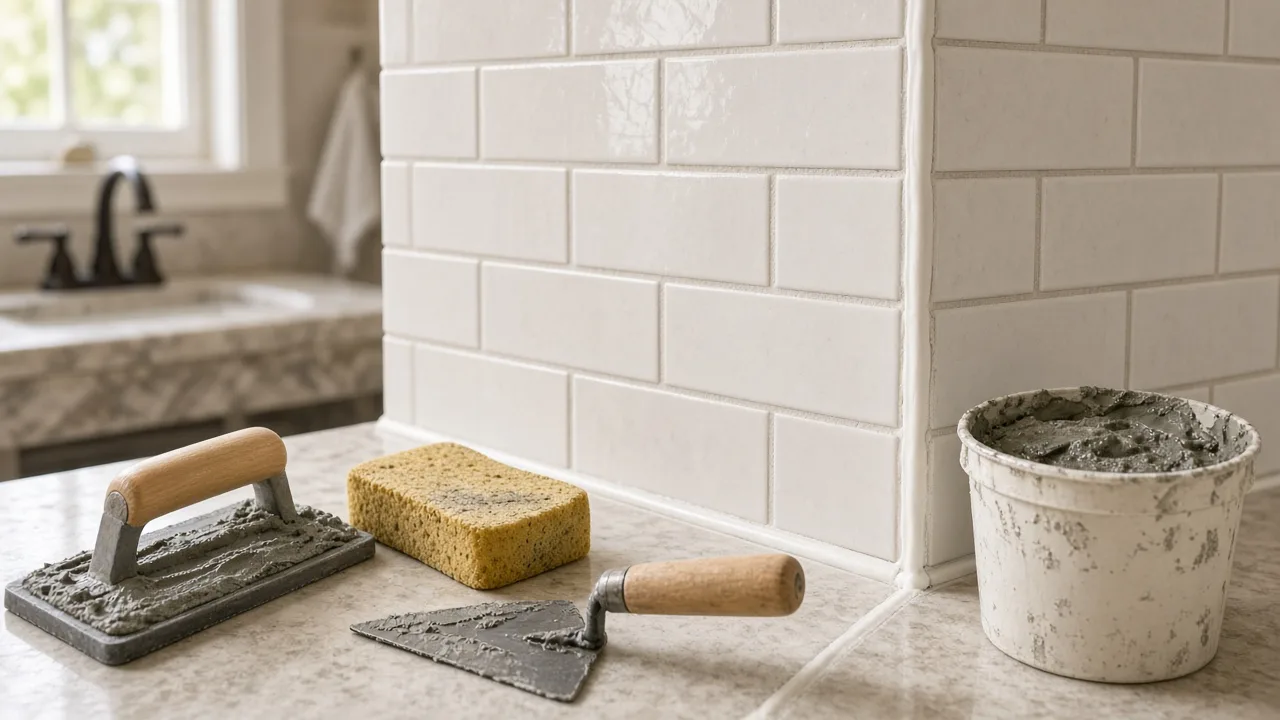
Why San Antonio tile and grout wear out first: the hard-water factor
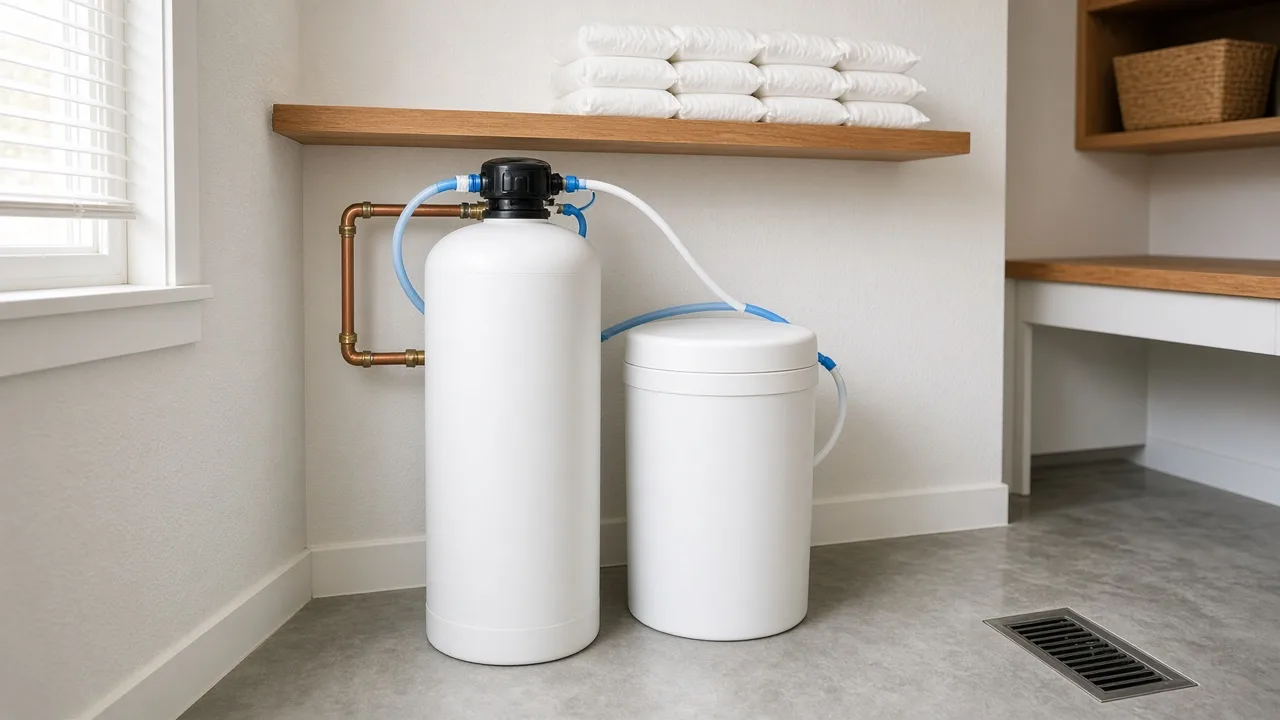
Ask any tile installer who works in San Antonio and they will name the same culprit: the water. SAWS reports typical hardness of 15 to 20 grains per gallon, roughly 250 to 350 parts per million, which puts the city's tap water far past the national threshold for very hard water. When that water evaporates off tile, it leaves calcium and magnesium deposits behind. Grout takes the worst of it because it is porous and slightly textured: it drinks in the mineral-laden water, then shows white crusty stains, a chalky dull film, and eventually weakens to the point where chunks crumble out of the joints.
- Grout in showers and around tubs fails fastest because it stays damp between uses, so mineral deposits and mildew build up together
- Tile glaze dulls under a white or gray haze that scrubbing alone will not remove, especially on dark tiles where the film shows most
- Silicone caulk picks up the same minerals and discolors, and in a humid bathroom it is also the first place mildew takes hold
- Natural stone tile, like the travertine common in Hill Country homes, is even more porous, which is why it needs gentler care and more frequent sealing
- The fix is the same across Stone Oak, Alamo Heights, Bulverde, and Boerne: clean with the right products, then repair or replace the grout and caulk before the buildup sets in for good
Cracked tile: repair it or replace it?
Cracked tile is a different problem from stained grout, and it deserves a straight answer. A hairline crack in the middle of a wall tile can often be stabilized and re-grouted so it practically disappears. A tile cracked all the way through, chipped at a corner, or cracked around a drain or fixture needs replacing, because a broken tile is also a broken waterproofing layer. The honest question is whether replacement tile is available, and the answer shapes the whole job.
- Hairline cracks and chips smaller than a thumbnail can often be repaired in place with color-matched crack filler and fresh grout
- A cracked tile in a wet area, a shower floor, or a tub surround should be replaced, since water will keep finding the crack
- Matching tile is the real project: if the original tile is discontinued, a handyman can blend a close match, pull a spare from an attic or garage stash, or help you pick a replacement for a full wall
- Loose tiles that sound hollow when tapped usually mean the thinset underneath gave way, and they should be removed and reset rather than re-grouted over
- DIY tile replacement sometimes works, but a bad cut or a chip on the neighboring tile turns a one-tile fix into a two-tile fix, which is why most homeowners call a handyman near me in San Antonio for the job
Grout repair and regrouting: what the job actually includes
Regrouting sounds simple, and the finished result looks simple, but the process is methodical because every step affects the next one. Done right, the job starts by removing the old grout to the right depth and allows a full day of cure time before the shower is used again.
- The old grout is raked or cut out to a consistent depth, usually between half and two-thirds of the joint, without chipping the tile edges
- The joints are cleaned and dried completely; new grout will not bond to damp, dusty joints, which is the most common DIY failure
- New grout is mixed to match your existing color, pressed in firmly, and the excess is sponged away inside the manufacturer's time window
- After the grout cures, a penetrating sealer goes on to slow the hard-water buildup and make the joints far easier to clean
- Spot repairs work when the damage is one wall or one joint, but when stains and crumbles show up everywhere, a full regrout costs about the same per square foot and leaves the whole surface even
Recaulking: the small fix with the biggest visual payoff
If you want the single highest-impact fix before holiday guests arrive, it is usually the caulk. The bead of silicone where the tub meets the tile, around the shower pan, and along the counter backsplash collects soap residue and minerals, darkens, and starts to separate at the corners. A fresh, clean bead of silicone makes the whole bathroom read as clean in a way that no amount of scrubbing can match, and it is a job that finishes in a single visit.
- Old caulk is cut out completely, not painted over, because layering sealant over failing caulk guarantees the same spots fail again
- The joint is cleaned with a mildew remover and dried thoroughly; silicone simply will not cure against moisture
- A smooth, even bead is tooled with a gloved finger or a caulk tool, and painter's tape keeps the lines straight for a professional finish
- Corners, seams, and the tub-to-tile transition get the same treatment so the whole room looks consistent
- In a consistently damp bathroom, a mildew-resistant silicone rated for kitchens and baths lasts the longest
- If the same corner gap keeps coming back, the problem is usually movement in the tub or the tile underneath, and the honest fix starts there before the new silicone goes on
Tile and grout questions San Antonio homeowners ask
- Can you match my old tile for a repair?
- Sometimes perfectly, and sometimes honestly. If the tile is still in production, a close match is straightforward. If it is discontinued, the options are a spare tile from the attic or garage, a section of tile hidden behind a vanity or toilet that can be quietly swapped out, or replacing one wall or one field of tile rather than a single piece. Ask for Chris brings options to the estimate instead of promising a miracle match.
- Does grout really need to be sealed in Texas?
- Yes, and in San Antonio it is not optional. Sealing does not make grout waterproof; it closes the pores so water and minerals do not soak in as fast, and that is exactly what this climate attacks. A sealed joint still needs wipedowns, but it stays lighter, cleans easier, and lasts years longer than an unsealed one.
- Can you regrout just one wall of my shower?
- Usually, if the grout that remains is still sound. The risk is color: grout darkens with age, so a fresh joint can stand out against the old ones until it settles in. When the job covers a full surround or the grout is failing everywhere, a complete regrout is the honest call, and it costs far less than re-tiling.
- Is re-tiling a shower a handyman job or a tiler's job?
- A full tiled shower, with a new pan and a waterproofing membrane, is a tiler's project and deserves one. What a handyman in San Antonio does every week is the repair side: replacing a few tiles, regrouting, recaulking, resetting a loose tile, and refreshing a backsplash in place. If a project turns into a full gut, Ask for Chris will say so up front rather than take on work that needs a specialist.
- What should I clean my tile with, and what should I never use?
- For ceramic and porcelain tile, a pH-neutral cleaner and a soft brush handle the daily buildup, with a diluted vinegar or citric acid solution saved for heavier mineral deposits. The hard rule: never use acid cleaners, vinegar included, on natural stone like travertine, marble, or limestone, because acid etches the surface. When in doubt, test any cleaner on an out-of-sight tile first.
Tile repair and regrouting in San Antonio with Ask for Chris
From a cracked floor tile in a Stone Oak kitchen and a full regrout in a Fair Oaks Ranch master bath to weathered caulk around every tub in a New Braunfels vacation rental, Ask for Chris handles tile repair, regrouting, recaulking, and backsplash refresh work across San Antonio and the surrounding areas: Bulverde, Boerne, Spring Branch, Canyon Lake, Helotes, Schertz, and the Texas Hill Country. Every job starts with an honest estimate: we tell you which fixes hold, which tiles are worth matching, and what the water in your house is doing to the rest of the bathroom. If you, or a relative hosting family this month, have been searching for handyman services San Antonio homeowners trust for home repairs that disappear into the finish, one call covers the list. Call (210) 951-9357 or email help@askforchris.com, available 24 hours a day.
Tip: the fastest way to slow hard-water damage is a squeegee. Two passes across the shower walls after each use costs ten seconds and removes most of the mineral-laden water before it dries onto the tile. Paired with resealing the grout when it needs it, usually every year or two, a squeegee is the cheapest tile maintenance in San Antonio.