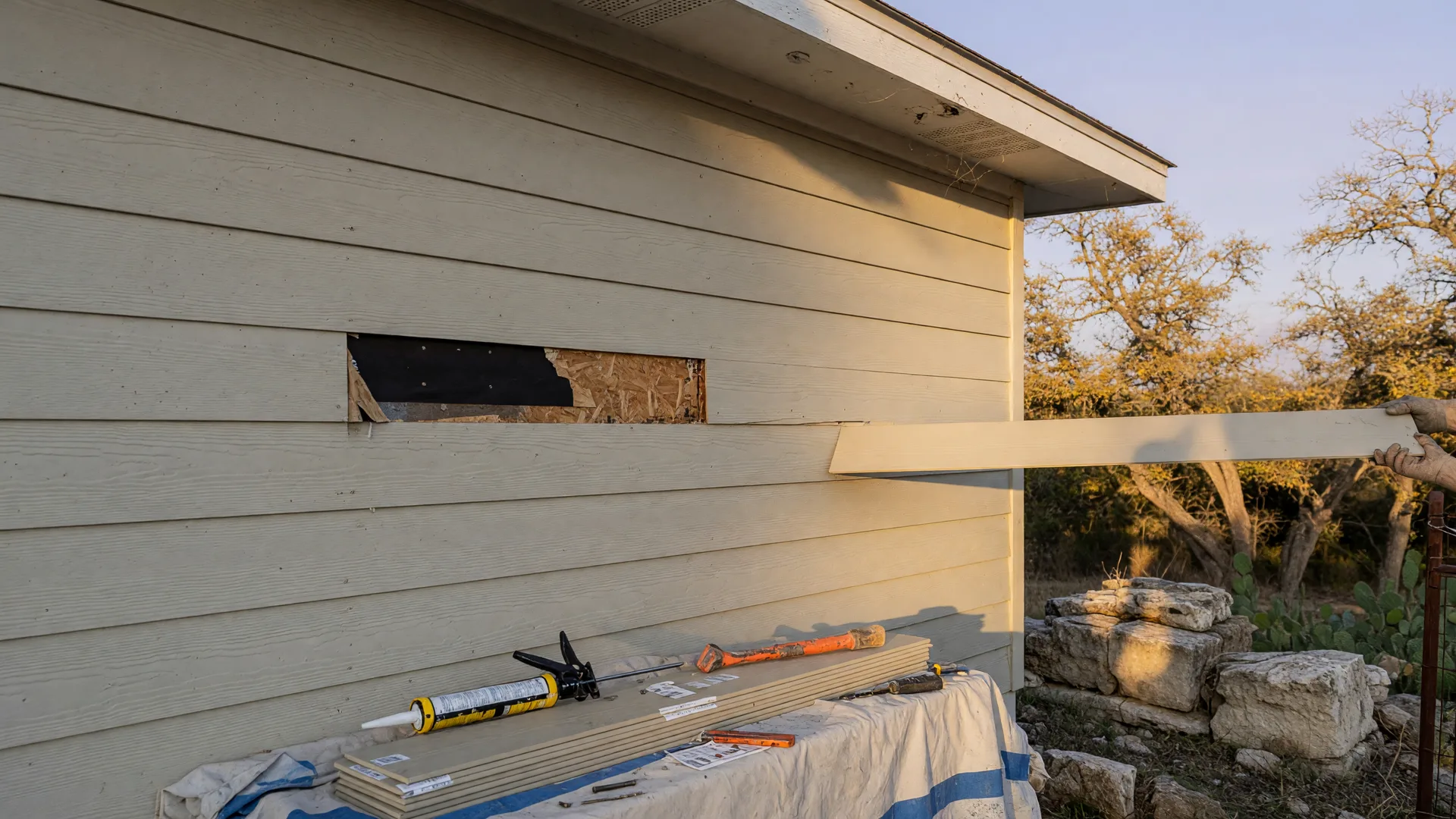
Why San Antonio weather is hard on siding and soffits
Texas hail season runs roughly March through May, with the peak storms landing in April and May, and San Antonio sits right in the middle of that pattern. A single spring storm can dent vinyl, crack fiber cement, and punch holes in soffits, and the damage is often spread across the whole house rather than one side. Then the sun takes over. Years of intense Texas UV fade and warp vinyl, dry out caulk, and make wood brittle, so the siding that survived spring starts failing by summer. Add the wind that comes with every thunderstorm, and you have panels lifting, corners pulling loose, and soffit boards separating from the roofline. Homes across Stone Oak, Alamo Heights, and the Hill Country towns from Bulverde to Boerne all show the same pattern: the damage is rarely one panel, it is a whole side of the house.
The most common siding problems we fix
- Hail dents and cracks in vinyl, fiber cement, and aluminum siding
- Wind-lifted panels and corners that have pulled loose from the wall
- Sun-warped or faded vinyl that has buckled out of its channel
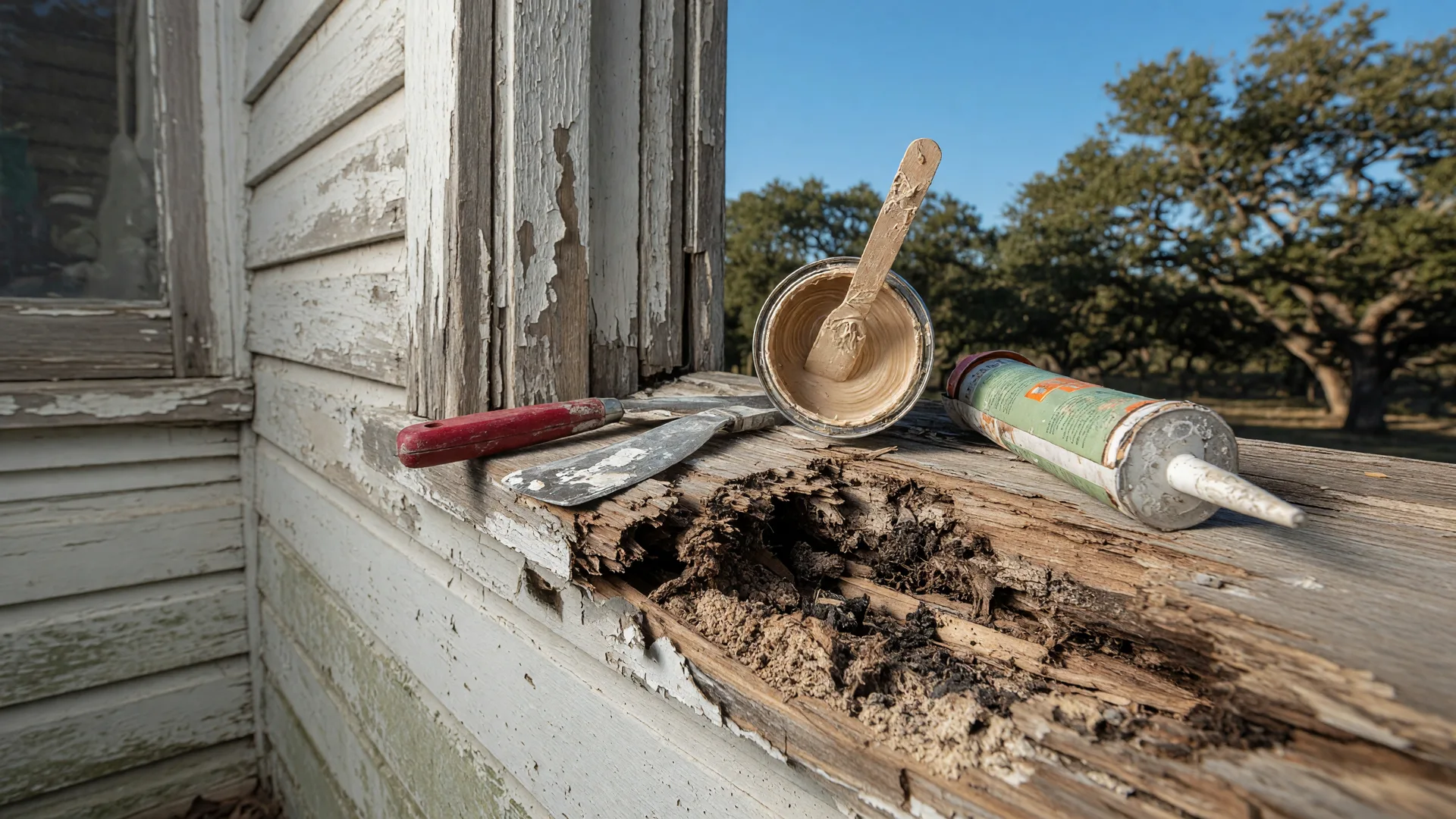
- Rotted or water-damaged wood siding, especially near the ground and under windows
- Cracked or missing caulk at corners, window and door frames, and panel seams
- Holes from branches, ladders, or storm debris
- Gaps where panels meet, exactly the spots where bugs and moisture get in
Soffit and fascia: the part of the house people forget
The soffit is the underside of your roof overhang, and the fascia is the board the gutters hang from. They sit in the weather all year and get almost no attention until something goes wrong. Soffit vents are how your attic breathes: when soffit panels are dented, cracked, or pushed out of their channels, attic ventilation suffers, and a hot Texas attic drives up cooling costs and shortens the life of your roof. Fascia boards that rot or pull away from the roofline let water run behind the gutters and down the exterior wall, which is how small exterior damage turns into interior water stains. After a hail storm, walk the roofline and look up: dents in the soffit mean the roof took the same hit, and loose fascia means the gutters are not far behind. Repairing soffit and fascia is a handyman job that protects the roof, the attic, and the walls at the same time.
Repair it or replace it? The honest breakdown
A single dented panel, a cracked corner, or a loose section of caulk is almost always worth repairing, and a handyman can usually match the existing siding well enough that the fix disappears. A whole wall of sun-warped vinyl, siding that has rotted through in several places, or panels that have been patched more than once is usually better replaced, because patching a failing wall just moves the problem to the next panel. The same honesty applies to soffits: one dented panel is a repair, a roofline of cracked and separated panels is a replacement. When a repair would cost nearly as much as new siding, we tell you that plainly before we pick up a tool. On Hill Country homes in Spring Branch, Fair Oaks Ranch, and Canyon Lake, where limestone, brick, and fiber cement are common, matching the existing material matters, and we are honest about what can be matched and what cannot.
Siding and soffit repair questions San Antonio homeowners ask
- Can you match my existing siding, or will the repair be obvious?
- Most repairs can be matched well: vinyl and aluminum panel styles are widely available, fiber cement comes in the same profiles and can be painted to blend, and wood can be cut to match. The honest answer depends on how old the siding is, because colors fade and manufacturers discontinue profiles. We tell you before we start whether the repair will blend in or whether a replacement section is the better call.
- Should I file an insurance claim for hail damage to my siding?
- If a storm dented or cracked siding across several sides of the house, it is worth documenting and checking with your insurance, because hail damage is often covered. We handle the repair side of insurance claims: we assess the damage, take photos, and give you a clear list you can hand to your adjuster. We do not file claims or negotiate for you, but we make the repair side easy to document.
- How do I know if my soffit vents are working?
- Look up at the underside of the overhang: soffit vents are the perforated panels or round vents under the roofline, and they need clear airflow from outside to the attic. When panels are dented shut, painted over, or blocked by insulation, the attic stops breathing. A quick sign of trouble is a hot attic in summer or moisture buildup in winter, and a handyman can clear, repair, or replace the vents in a single visit.
- Is siding repair a do-it-yourself job or a handyman job?
- Replacing one easy panel near the ground is a fair weekend project if you have the tools and the matching material. The jobs that need a handyman are the ones up on a ladder: upper-story panels, soffit and fascia work at the roofline, corners that need recaulking, and matching repairs across a whole side of the house. That is also where the safety and the finish matter most.
Siding and soffit repair in San Antonio with Ask for Chris
From hail dents in Stone Oak to a rotted soffit on a Hill Country home in Bulverde, Boerne, or New Braunfels, Ask for Chris handles siding repair, soffit and fascia repair, and the caulking and sealing that keeps water out. We serve San Antonio and the surrounding areas: Alamo Heights, Helotes, Fair Oaks Ranch, Spring Branch, Canyon Lake, Schertz, and the Texas Hill Country. Honest estimate first, work done right the first time, and a final walkthrough after. If you have been searching for handyman services near me San Antonio homeowners trust for home repairs, one call covers the whole list. Call (210) 951-9357 or email help@askforchris.com, available 24 hours a day.
Tip: after the last big spring storm, walk around your house and look at the siding and soffits from a few angles, and photograph anything dented, cracked, or lifted. Photos taken the week of the storm make the insurance conversation easier, and catching a loose panel early keeps wind from peeling a whole wall.