Why outlets and switches wear out in San Antonio homes
Outlets and switches are mechanical devices, and every plug pushed in and every click of a switch wears the metal contacts inside. The result is a slow failure that most homeowners only notice when a plug feels loose or a receptacle stops working altogether.
- Older homes across Alamo Heights, Tobin Hill, and Terrell Hills often still carry receptacles from the 1980s or earlier, with contacts that have stretched out of shape over decades of use
- Back-stab wiring, where the wire is pushed into a hole in the back of the receptacle instead of wrapped around a screw, is common on older devices and runs loose as the years add up
- Plugs that fall out of the wall or crackle when moved are the classic sign of a worn receptacle
- Switches that feel mushy, need extra force, or no longer have a clean click are wearing out inside, and a switch that runs hot is worth replacing promptly
- Builder-grade devices in newer communities such as Stone Oak and Fair Oaks Ranch are made to a tighter budget, and they wear out faster than parts rated for daily use
The swaps a handyman can do safely, and the line that stays with an electrician
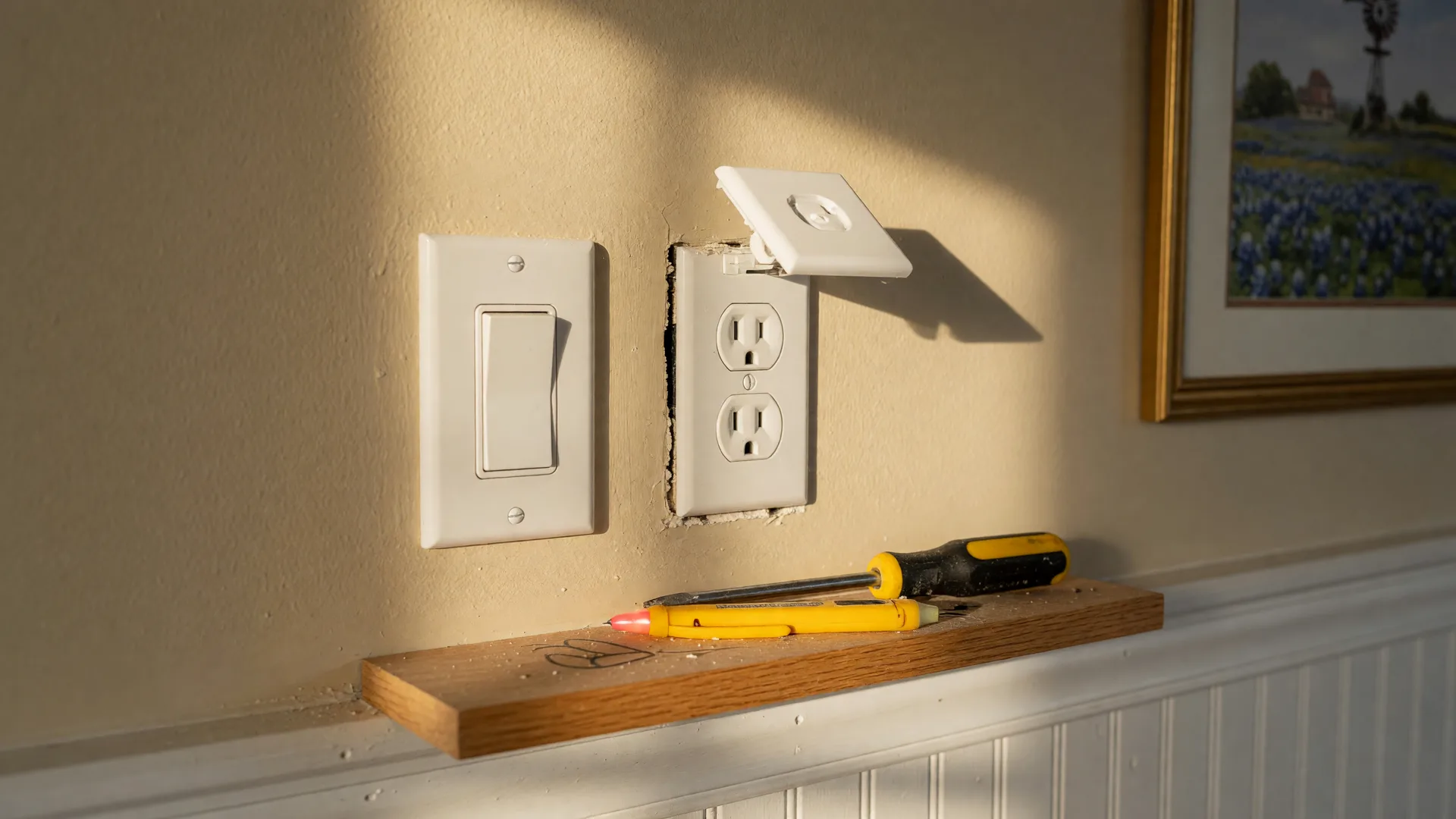
Replacing an outlet or a light switch is a device swap on an existing circuit: the power goes off at the breaker, the old device comes out, the same wires connect to the new one, and the plate goes back on. That is standard handyman services San Antonio homeowners use every week, and Ask for Chris says it plainly: when the job needs a new circuit, new wire run inside the walls, a panel change, or service work, Texas law and basic safety put that with a licensed electrician.
- Replacing worn outlets, switches, dimmers, and cover plates on existing circuits
- Upgrading to GFCI receptacles in kitchens, bathrooms, laundry rooms, garages, and outdoor locations, where modern electrical code expects ground-fault protection
- Installing USB outlets, tamper-resistant receptacles, and smart switches that control lights from a phone
- Replacing a receptacle that lacks a ground, with an honest answer based on what is actually in the box before any three-prong promise is made
- Adding a new circuit, extending wiring, rewiring, or panel work stays with a licensed electrician, and we will point you to the right professional
Signs a receptacle or switch needs attention now
Most outlet problems announce themselves before they fail completely. If any of these show up, shut the device off at the breaker and have it looked at, because the risk is not the device itself, it is the connection heating up inside the wall.
- A plug that falls out or hangs loosely, especially one supporting a space heater or an appliance drawing real current
- A switch or plate that feels warm or hot after the light has been on
- Buzzing, hissing, or crackling sounds from an outlet or switch
- A burning smell near a receptacle, a scorch mark on the face, or a plate that has darkened
- Sparkling or a visible flash when a plug is pulled
- A GFCI that will not reset, or a receptacle that works only when the plug is jiggled
Upgrades worth doing while the plate is off
An outlet swap is a small job, but it is also the moment to remove a decades-old nuisance and add modern convenience. These are the upgrades San Antonio homeowners most often ask for, and each one fits in a standard visit.
- GFCI receptacles for kitchens, baths, laundry, garages, and exterior walls, where code expects ground-fault protection against shock near water and outdoors
- USB outlets that charge phones and tablets without a charging block covering the whole receptacle
- Tamper-resistant receptacles, which protect children from pushing objects into the slots and are standard in new residential construction
- Dimmers matched to LED bulbs, so the lights dim without flickering or humming
- Smart switches and smart dimmers that control lights from a phone, on a schedule, or by voice
- Switch plates and covers replaced at the same time, so the wall looks finished instead of patched
Two-prong outlets in older San Antonio homes: the honest options
Homes built before the 1960s often still have two-prong receptacles with no equipment ground, and in neighborhoods like Tobin Hill, Southtown, and Terrell Hills that is a common reality. Replacing a two-prong receptacle with a three-prong one requires either a grounded circuit behind the wall or GFCI protection at the device, and the honest answer depends on what is actually in the box and how the circuit is wired.
Ask for Chris checks the existing wiring before promising anything. When the box has no ground, the safe options are a GFCI receptacle with a clear label, a three-prong receptacle protected by a GFCI breaker on the circuits that allow it, or a licensed electrician to add a real ground, which matters most for sensitive electronics and anything that draws heavy current. For the rest of the home, a working two-prong outlet in good condition is not an emergency, but an ungrounded three-prong install is worse than a bare two-prong, because it offers the look of safety without the ground.
Outlet and switch questions San Antonio homeowners ask
- Is replacing an outlet a DIY job or a handyman job?
- It is a classic handyman job when the power is off at the breaker and the box holds standard wiring. The reason homeowners call is the details: which screws to tighten, what to do when the box is crowded, whether the circuit has a ground, and how to seat the device so the plate sits flush. Ask for Chris does the swap safely, checks the connections, and tests the receptacle before the power goes back on.
- Why do my plugs fall out of the outlet?
- The metal contacts inside the receptacle have stretched out of shape after years of use, so they no longer grip the plug firmly. There is no real fix besides replacing the receptacle. Because a loose connection is also a warm one, a receptacle that holds plugs loosely is worth swapping sooner rather than later, especially for anything that draws current.
- Do I need a licensed electrician for outlet or switch work?
- For a straight device swap on an existing circuit, no: that is daily work for a handyman San Antonio homeowners trust. You want a licensed electrician when the job needs a new circuit, new wire inside the walls, a panel upgrade, or service work on the main electrical system. Ask for Chris is honest about which one your job needs before any work starts.
- Can you install a USB outlet?
- Yes, USB outlets are one of the most requested upgrades of the year. The new receptacle replaces the old one in the same box and provides both standard plugs and charging ports, so the charging block disappears. We match the device to the layout of your kitchen, bedroom, or home office.
- Where do I need GFCI outlets?
- Modern electrical code expects ground-fault protection where water is near: bathrooms, kitchens, laundry rooms, garages, and outdoor receptacles. Homes built before GFCI requirements often lack them, and installing them is a low-cost way to make the whole household safer. If a GFCI trips often, that is a sign to have the circuit checked, not to ignore it.
- My switch hums when the light is on. What is that?
- A hum from a dimmer is often the dimmer and the bulb type fighting each other, and a hum from a standard switch can mean a worn mechanism or a loose connection. We replace the switch, match the dimmer to the LED bulbs in the fixture, and check the connections while the power is off.
Outlet and light switch replacement in San Antonio with Ask for Chris
From a worn kitchen receptacle in Stone Oak to a USB upgrade in a home office in Fair Oaks Ranch, from two-prong outlets in an older Alamo Heights house to dimmers and smart switches in Boerne, Ask for Chris handles outlet and light switch replacement across San Antonio and the surrounding areas: Bulverde, Spring Branch, New Braunfels, Canyon Lake, Helotes, Schertz, and the Texas Hill Country. The power goes off at the breaker, the work is done safely and level, and the job finishes with clean plates and a final walkthrough. If you have been searching for a handyman near me San Antonio homeowners trust for home repairs that make daily life easier, one call covers the whole list. Call (210) 951-9357 or email help@askforchris.com, available 24 hours a day.
Tip: once a year, unplug everything and test each receptacle with a spare plug: push it in and give it a gentle tug. A plug that slides in loosely or drops out on its own means the receptacle's contacts are worn, and swapping it beats living with a warm connection behind the couch.