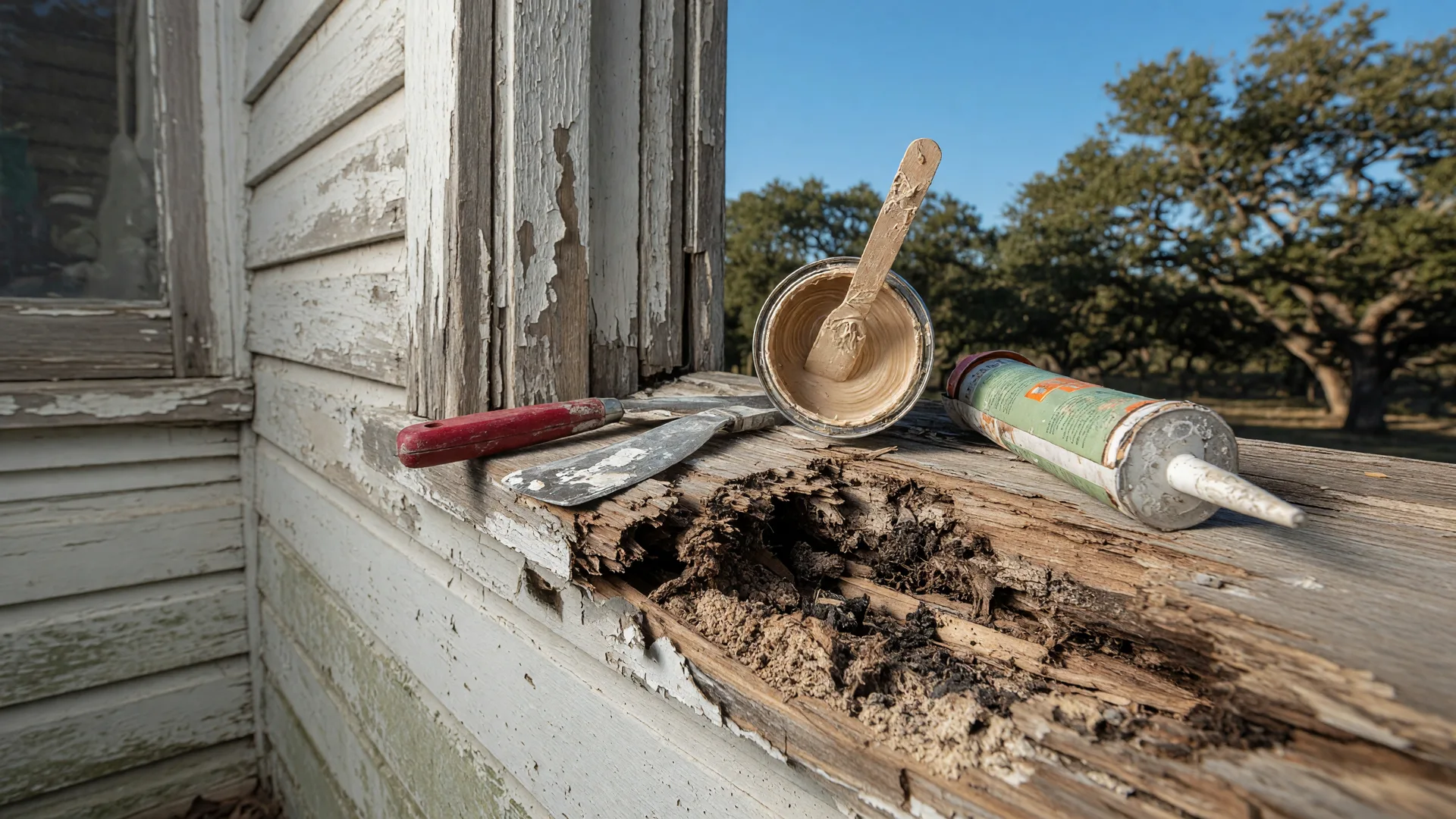
Why wood rot is so common in San Antonio and the Hill Country
Rot is not caused by the wood itself or by the bugs that show up later. It is caused by moisture and time: wood that stays wet long enough picks up a fungal infection that turns it soft, spongy, and eventually crumbly. San Antonio gives rot the perfect climate, with heavy spring and fall storms, humid nights, and oak shade that keeps exterior wood damp long after the rain stops. The result is that exterior wood rot shows up in the same places citywide and across the Hill Country.
- Window sills are the classic spot: the top edge collects water, the paint cracks, and rain works into the bare wood underneath
- Door frames and thresholds where water runs off the door and sits against the framing
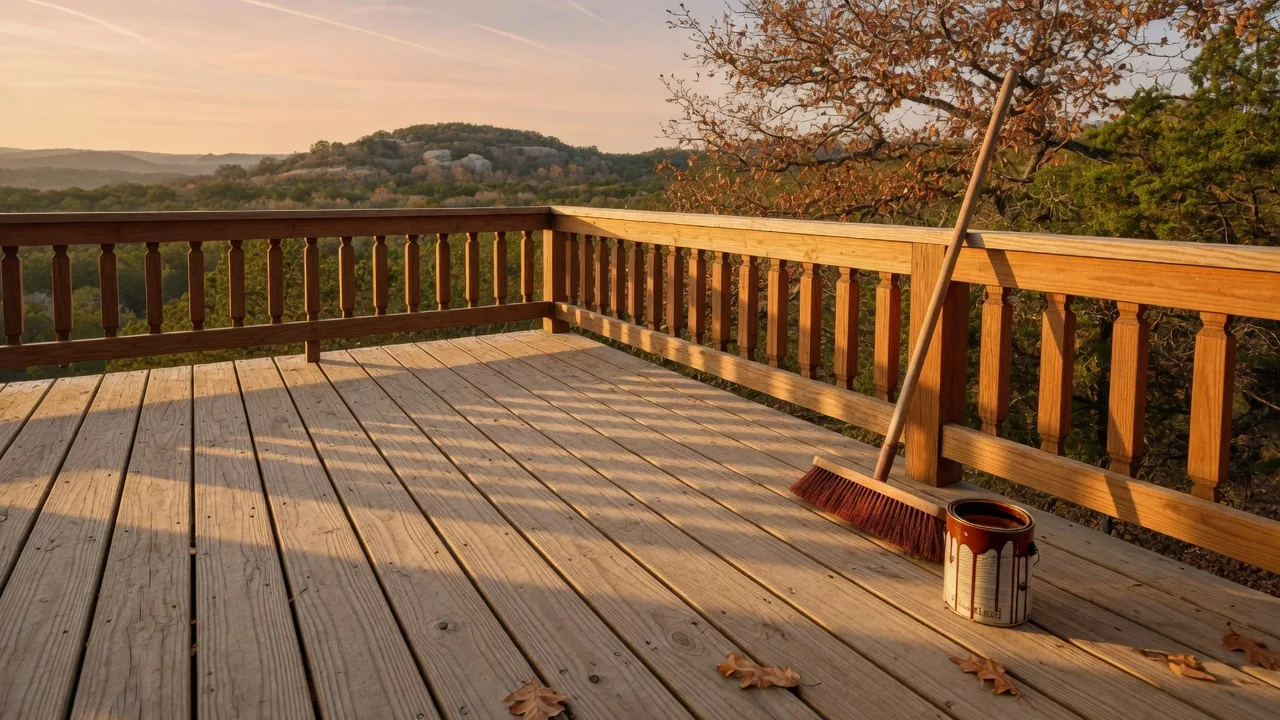
- Deck posts, stair stringers, and railings where the wood meets concrete or wet ground
- Soffit corners and trim joints where caulking has dried, cracked, and opened up
- Hill Country homes on acreage catch more wind-blown rain, and weekend homes near Canyon Lake deal with damp lake air that never fully dries out
- Fence lines, garden beds, and hose bibbs that splash the same board year after year
How to inspect for wood rot: what to look for
The good news is that rot is easy to find if you know what to look for, and catching it early keeps the repair small. Walk the outside of your home once a season, in daylight, and check every place where wood meets water, from the roofline down to the ground.
- The probe test: press the tip of a flathead screwdriver or a pick into the wood. Sound wood is hard and resists; rotted wood sinks in soft, like a pencil into cardboard
- Paint that blisters, bubbles, or flakes in the same spot year after year, even after a fresh paint job
- Dark, water-stained streaks running down trim, sills, and door frames
- Wood that feels spongy or crumbles when you press it, especially along bottom edges
- Cracked, missing, or shrunken caulk at the joints where trim meets siding and where decks meet the house
- Bare wood anywhere, because unprotected wood is exactly what rot waits for
What a professional wood rot repair includes
A proper rot repair is not covering the spot with more paint, and it is not just piling filler into a soft hole. The wood underneath has to be dealt with, or the rot keeps spreading and the repair fails from the inside out.
- An honest diagnosis first: how far the rot goes, whether it is just the board or the framing behind it, and repair versus replace
- Removing all the rotted wood, down to sound, solid wood
- Treating the remaining wood and rebuilding the shape with wood epoxy and filler where the repair calls for it
- Replacing whole boards, sills, and trim pieces when too much is gone to rebuild honestly
- Priming every raw surface so moisture cannot find bare wood again
- Caulking the seams and sealing the top edges where water lands
- Finish paint matched to your trim so the repair disappears
Repair or replace: when a patch is a real fix
Whether rotted wood gets rebuilt or replaced comes down to how much is left. When the rot is shallow and the board itself is still sound, epoxy and filler rebuild it, and the repair outlasts the original paint. When the board has turned mushy, cracked end to end, or lost its structural shape, the honest fix is to replace that piece with a new one, primed and sealed to match your home.
Two cases deserve a specialist, and Ask for Chris will say so plainly: rot that has reached load-bearing framing, joists, or the posts holding up a deck or roof, and rot tied to a leak you cannot find, because the source of the water has to be fixed before the wood is repaired. For everything from a Chihuahua-sized spot on a sill to a full rotted threshold in an older Alamo Heights home, the same rule applies: cut it out to solid wood, seal it, prime it, and paint it.
How to keep wood rot from coming back
Rot comes back when the conditions come back, so the repair is only half the job. The other half is keeping water away from the wood long enough for it to dry, which is exactly the kind of seasonal upkeep that keeps a home in Schertz, Boerne, or Fair Oaks Ranch looking sharp all year.
- Keep paint fresh on exterior wood; paint is the skin that keeps water out
- Recaulk trim joints, sills, and deck-to-house connections as part of spring and fall maintenance
- Clean gutters and point downspouts away from the house so water is not dumping against the foundation and trim
- Check hose bibbs, irrigation, and sprinklers that soak the same siding and deck boards every day
- Let Hill Country decks dry: move potted plants, doormats, and furniture that trap moisture against the boards
- Fix the leak first: a flashing, roof, or plumbing leak has to be stopped before any rot repair is worth doing
Wood rot questions San Antonio homeowners ask
- How can I tell if it is wood rot and not just old paint?
- Press into the wood with a screwdriver or a pick. Paint that bubbles and flakes at the surface while the wood underneath stays hard is cosmetic, but if the tool sinks in and the wood comes out dark and spongy, that is rot. The sooner it is cut out and rebuilt, the smaller the repair.
- Does rotted wood always have to be replaced?
- No. When the rot is shallow and the surrounding wood is still sound, we remove the rotted material, treat what remains, and rebuild the shape with wood epoxy and filler, then prime and paint. When the board is mushy through most of its thickness, cracked end to end, or structural, replacement is the honest fix.
- Is wood rot covered by home insurance?
- It depends on your policy and on what caused the rot. Damage from a sudden covered event such as a storm is sometimes covered, while rot caused by long-term moisture and lack of maintenance usually is not. The honest first step is to ask your agent and to take photos of the damage while it is still visible.
- Will the rot come back after you repair it?
- Not if the conditions are fixed. We remove all the rotted wood, treat what remains, and seal and paint so water cannot find bare wood again. Keeping that paint, caulk, and drainage maintained is what keeps rot from returning years down the road.
- Is wood rot the same as termite damage?
- They are different problems with similar symptoms. Rot is fungal, caused by moisture, and softens the wood; termites are insects that tunnel through wood and often leave mud, sawdust, and hollowed sections. We will tell you honestly which one you have, and if it looks like termite activity, we will point you to a licensed pest professional for the treatment side of the job.
Wood rot repair in San Antonio with Ask for Chris
From a rotted window sill in Stone Oak to a deck rebuild on a weekend home at Canyon Lake, from door frames in Helotes to trim in New Braunfels, Ask for Chris handles wood rot repair across San Antonio and the surrounding areas: Alamo Heights, Bulverde, Spring Branch, Boerne, Fair Oaks Ranch, Schertz, and the Texas Hill Country. Honest estimate before we start, the water source found and fixed, and a final walkthrough so you can see the repair disappear before we leave. If you have been searching for a handyman near me San Antonio homeowners trust for exterior home repairs before the winter rains, one call covers the whole list. Call (210) 951-9357 or email help@askforchris.com, available 24 hours a day.
Tip: pick one dry Saturday this season and walk your whole property with a screwdriver, checking sills, thresholds, deck posts, gate frames, and any wood that touches dirt. Poke, don't paint: a soft spot you find in an afternoon is a small repair today and a full board replacement next season.