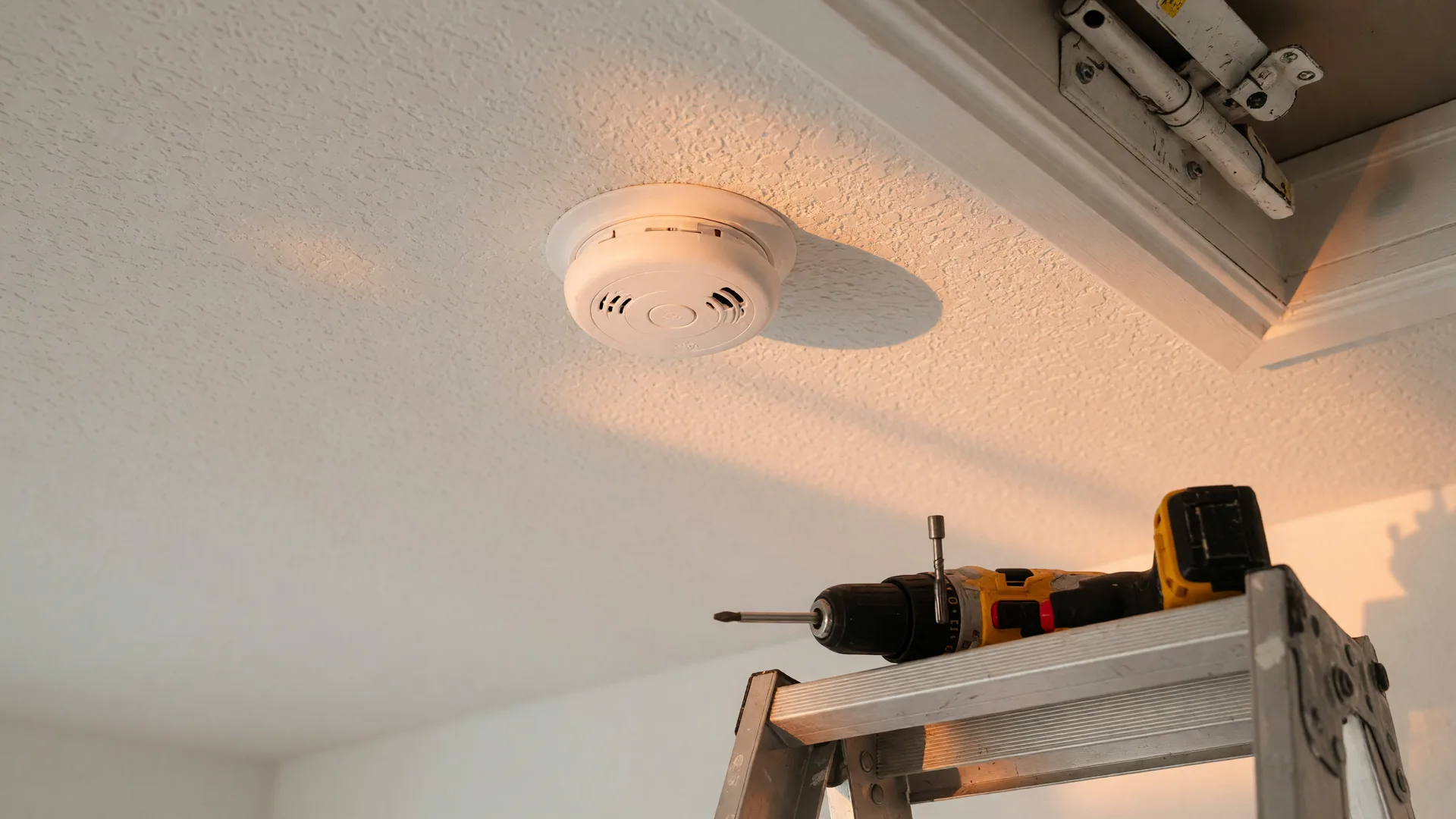
Why late October is the month to check every detector in your San Antonio home
Daylight saving time ends on Sunday, November 1, 2026, and the old habit behind the reminder is still the right one: change your clocks, change your batteries. In San Antonio that date also lines up with the start of heating season, which is exactly when smoke detectors and carbon monoxide detectors earn their keep. Gas furnaces, fireplaces, and water heaters start running every night, and the first cold fronts of the season bring the still, windless nights when a small leak or a slow fire can turn into something nobody hears coming.
That is why fire safety authorities in Texas push the fall check so hard. A detector with a dead battery cannot help you, and a detector past its stamped replacement date cannot be trusted no matter how new the batteries look. The fire that starts in a garage or an attic while the house sleeps is the one the bedrooms need to hear first, and only a working alarm in the right spot guarantees that.
Where smoke detectors belong in a Texas home
Fire safety guidance is consistent and specific: a smoke alarm inside every bedroom, one outside each separate sleeping area, which in practice means the hallway outside the bedrooms, and at least one on every level of the home, basement and finished attic included. In a typical one-story San Antonio ranch, that usually works out to two or three alarms along the bedroom hallway plus the living areas. In a two-story home in Stone Oak, Alamo Heights, or the Dominion, it means hallways on both floors and the path between them.
The bedroom itself matters most. Doors that stay closed at night trap smoke in the room where a fire starts, so the alarm inside the room is the only one guaranteed to wake the people sleeping there. Hallway-only alarms were the standard in older homes, and plenty of San Antonio houses still run on a single detector doing the work of several. Adding an alarm to each bedroom is the single most effective upgrade a handyman can make in one visit.
Smoke detector installation: hardwired, battery, and sealed 10-year units
- Hardwired replacement: newer hardwired units interconnect, so when one alarm sounds, the whole house knows. Swapping old units at the same junction boxes keeps the wiring and adds the interconnect, a clean handyman job
- Battery-powered detectors: a fast install anywhere there is ceiling or high-wall space, no wiring needed, the right fix for bedrooms and bonus rooms that never had a hardwired alarm
- Sealed 10-year lithium units: the battery is built in and lasts the life of the alarm, so there is no yearly battery change, no low-battery chirp to ignore, and the whole unit is replaced when the decade is up
- Interconnected systems: when hardwired alarms are linked, a fire at one end of the house still wakes the bedrooms, the setup safety authorities recommend for any two-story home
- Sensor type: photoelectric units respond faster to smoldering fires and are the right choice for bedrooms and the hallways outside them, and many new units combine photoelectric and ionization sensors in one alarm
Carbon monoxide detectors: the must-have for gas homes in San Antonio and the Hill Country
Texas does not require a carbon monoxide detector in every existing single-family home, but that is a legal technicality, not a safety recommendation. If your home has a gas furnace, a gas water heater, a fireplace, or an attached garage, you should have a CO detector. That describes most of San Antonio, and nearly every home in the Hill Country, where the propane tanks in Bulverde, Spring Branch, Boerne, and Canyon Lake keep furnaces, water heaters, and stoves running on fuel.
The February 2021 freeze is why many Texas homeowners installed their first CO detectors. During the blackout, generators running in garages and fuel-burning heaters brought indoors sent people to hospitals across the state. Carbon monoxide is odorless and colorless, and it hits hardest at night, when the family is asleep and the furnace is running. Placement is simple: one CO detector outside each sleeping area and one on every level of the home.
The 10-year rule: replace the alarm, not just the battery
Every smoke detector carries a date of manufacture stamped on the unit, usually on the back or the side, and fire safety authorities recommend replacing the entire alarm 10 years after that date. The sensor inside a smoke detector wears out even when the battery is fresh, which is why a 14-year-old alarm can fail a test on a quiet Tuesday. If you cannot find the date on the unit, treat it as expired and replace it.
The monthly test takes five seconds: press and hold the test button until the alarm sounds. Replace the batteries at least once a year, and in Texas the safest habit is to do it at the November 1 time change, when the clocks fall back. A chirp that keeps going after a fresh battery is the unit telling you its decade is up, not a battery problem.
Smoke detector questions San Antonio homeowners ask
- Can a handyman install a hardwired smoke detector?
- Yes, and it is one of the most common smoke detector jobs in San Antonio. Replacing a hardwired unit at an existing junction box means matching the wiring, mounting the new plate, and testing the interconnect, work a handyman does every week. If the home has no wired detectors and you want the upgrade, battery and sealed 10-year units go up anywhere with no new wiring.
- Why does my smoke detector chirp even after I change the battery?
- A chirp that continues with a fresh battery usually means the unit is past its replacement date. The sensor has degraded, and the alarm is telling you it can no longer be trusted. Check the date stamped on the unit; if it is 10 or more years old, replace the whole alarm, not just the battery.
- Do I need a carbon monoxide detector if my home is all-electric?
- If your home has no fuel-burning appliances and no attached garage, your CO risk is much lower. The exception is anything that burns fuel in or near the house: a fireplace, a gas oven, a backup generator, or an attached garage where a car idles even briefly. When in doubt, install one; the detectors are inexpensive and the placement rules are the same as for smoke detectors.
- Does Texas law require smoke alarms in a rental home?
- Yes. Texas law requires landlords to provide working smoke alarms inside each bedroom and in the corridor outside the bedrooms, and to keep them working. If you self-manage a rental in Leon Valley, Alamo Ranch, or anywhere in Bexar or Comal County, a handyman can install, test, and replace the alarms so the unit is compliant before a tenant moves in.
Smoke detector installation in San Antonio with Ask for Chris
From a single expired detector in a Converse ranch to a whole-home safety sweep in a two-story in Stone Oak, Ask for Chris handles smoke detector installation, replacement, and testing across San Antonio and the surrounding areas: Alamo Heights, the Dominion, Timberwood Park, Bulverde, Spring Branch, Boerne, Fair Oaks Ranch, Helotes, Canyon Lake, New Braunfels, Schertz, and the Texas Hill Country. We check the date on every unit, install what is missing, replace what is past it, and test the whole system before we leave. If you have been searching for a handyman near me San Antonio homeowners trust for home repairs and safety upgrades, one call covers the whole list. Call (210) 951-9357 or email help@askforchris.com, available 24 hours a day, with an honest estimate before any work starts.
Tip: use the November 1 time change as your standing reminder. Test every detector, replace the batteries in the units that take them, and read the stamped date on each one. If an alarm is 10 years old, or the date is missing, order the replacement now while the ladder is still out.